
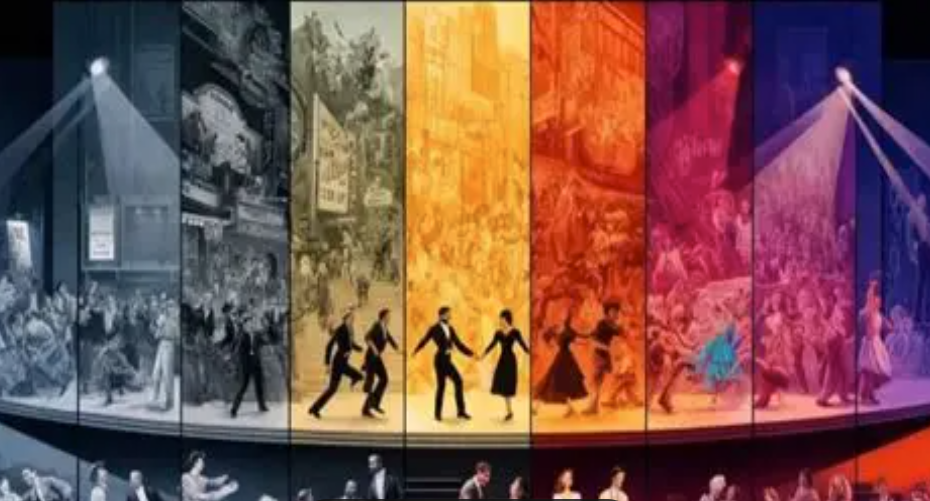
A musical theory essay written by Verena Hui
Terrence Mann once said, “Movies will make you famous; Television will make
you rich; But theatre will make you good.” In the 1800s, European opera emphasized
orchestral music and sung-through storytelling. Stories often were about royalty, high
drama, or mythology. Later, Operettas were introduced as lighter forms of operas. They
included shorter, catchier musical numbers, and spoken dialogue. Over time, musical
theatre replaced formal styles with contemporary music, used dance and songs to
advance the plot, and included modernized themes for larger audiences.
Musical theater is a form of live theatrical performance which tells a story through
spoken dialogue, acting, dance, and songs. These elements work together to strongly
showcase emotions, engaging the audience. The principal components are designed to
develop the characters, advance the plot, and engender a mesmerized audience. The
music includes instrumental pieces as well as the songs; these advance the story and
express emotion. The lyrics are the words of the song, conveying the meaning and
emotion of the character singing the words. The choreography enhances storytelling,
and the script provides spoken dialogue which structures the show. The acting brings
everything to life, as the actors combine movement, speaking and singing in their
character.
The Sound of Music is a beloved musical by composer Richard Rodgers. The
musical tells the true story of Maria von Trapp, a young woman who becomes
governess to the seven children of Captain von Trapp. Bringing music and joy to the
family and escaping Austria as the Nazis rise. The music is by Richard Rodgers, and
the lyrics are written by Oscar Hammerstein ||. Inspiration for the musical was from the
memoir The Story of the Trapp Family Singers by Maria von Trapp, published in 1949.
The Broadway production was choreographed by Joe Layton in 1959, but the film
version was choreographed by Marc Breaux and Dee Dee Wood. The script for the
original stage musical was written by Russel Crouse and Howard Lindsay. The musical
debuted on Broadway, November 16, 1959, a major success; and the film adaptation in
1965 won 5 Oscars. There are multiple iconic songs from this musical, but “My Favorite
Things” is considered the musical number most characterized by Richard Rodgers’
musical style. It features an instantly memorable melody, something Rodgers is well
known for. Rodgers used repetition and variation, making the song easy to remember,
thus crafting lyrical tunes The song is in a waltz-like ¾ time, a rhythm Rodgers favored.
Rodgers also had a penchant for waltzes, incorporating them with an American,
Broadway style, rather than a Viennese one. Rodgers also enjoyed using a romantic
and optimistic tone. In “My Favorite Things”, this is clearly demonstrated through the
positivity of the song, producing hope and love in the musical number. The song itself
helps provide comfort to the audience in multiple ways. Many of the verses illustrate
pleasant images, for example, “raindrops on roses” or “crisp apple strudels”. The song
is set in a major key, reinforcing a cheerful, comforting mood. It has a moderate tempo
which feels soothing rather than energetic. The song ends reminding the audience that
any negative feeling can turn into a positive one by recalling those simple joys. Some
themes in the song may include positivity, gratitude, and imagination. Overall, The
Sound of Music is a timeless musical combining music, joy and resilience. Filled with
memorable musical numbers, the story shows the audience how music and positivity
can keep us going even in the most difficult times.
Wicked is one of the longest-running Broadway musicals by Stephen Schwartz.
As the prequel to The Wizard of Oz, this musical tells the story of Elphaba (Wicked
Witch of the West) and Glinda (Good Witch) as former friends at Shiz University. The
story shows the two best friends of opposite backgrounds facing political corruption, and
social prejudice together, before Dorothy arrived. As both composer and lyricist,
Stephen Schwartz created the musical based on Wicked: The Life and Times of the
Wicked Witch of the West, written by Gregory Maguire in 1995. Winnie Holzman wrote
the script for the musical, and Marc Platt was the producer. The original Broadway
choreographer was Wayne Cilento, but the recent film adaptations were choreographed
by Christopher Scott. The musical premiered in 2003 on Broadway at the Gershwin
Theatre, winning multiple awards including Tony Awards. Wicked is a global
phenomenon, translated into several languages, played in multiple countries, and is one
of the most successful musicals ever. It was the inspiration for the modern film
“Wicked”, which has won numerous awards including Oscars, as well as the recent
“Wicked For Good”. The musical is full of remarkable musical numbers, but “Defying
Gravity” best represents Schwartz’s musical style. In his songs, Schwartz uses poetic
lyrics such as imagery or metaphors to enhance storytelling. “I’m flying high, defying
gravity” strongly demonstrates his ability to seamlessly combine story and message
together, providing lyrics that are motivational and symbolic. Schwartz is also known for
writing powerful vocal lines, often soaring and impactful; this is a key factor of this
song’s popularity. The song dynamically crescendos, and requires a strong chest voice,
showcasing Schwartz’s skill in building musical tension and release. The song also
features an anthemic melody that is emotionally powerful, a hallmark of Schwartz’s
compositions; it balances lyrical beauty with a dramatic impact. He also enjoyed using
rhythm to shape emotion, rather than energy. “Defying Gravity” gradually builds in
rhythmic momentum as Elphaba’s decision solidifies. The long-sustained notes instead
of strong rhythmic accompaniment help to heighten drama. The acclaimed final note is
paired with a visual spectacle, demonstrating Schwartz’s strong understanding of
musical theater. Overall, Wicked examines social injustice, identity, and choice. It
features emotionally driven music, and challenges the audience to question
appearances and judgments, showing that “wicked” is often a matter of perspective.
Thanks for reading! This is an article written by Verena Hui
Leave a Reply