
Thanks for reading! This article is written by Tobey Cai.
Tag: social science
-
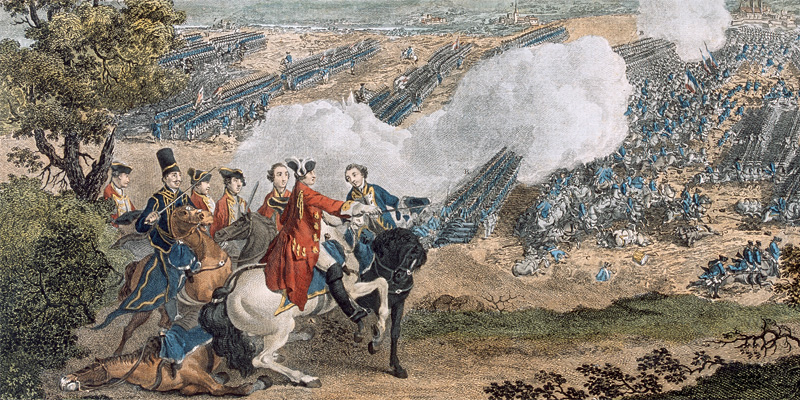
A Closer Look at the Clever and Pivotal Turning Points of the Seven Years’ War
An analysis of the Seven Years’ War by Roseanna Wang
‘Strategy is your war plan. If you go to a war without your strategy, you might not be able to defeat the enemy.’ This quote by Pooja Agnihotri proves that the most significant events that cause victory in war are the clever strategies and tactics, not famed battles. At first, the major events of the Seven Years’ War that come to mind are the Acadian Expulsion, Battle of Louisburg, and Battle of Plains of Abraham. Taking a deeper dive into the intricacy of war, it becomes known that the crucial events of war come from a root intent which forms a strategy with a lasting impact. This is why the three most impactful events in the Seven Years’ War are the ‘Join or Die’ political cartoon, Britain funding Prussia, and the Battle of the Plains of Abraham.
The ‘Join or Die’ political cartoon by Benjamin Franklin was the primary event of importance. It laid the foundation to British victory and gathered British colonies to fight. In 1754 France had a strong advantage despite Britain’s numbers; they were allied with the Indigenous and already knew how to survive winters in North America. (Theodore Michael Christou et al., 2016). Naturally, the British needed to assemble in a cooperated force against the French and their Indigenous allies. Stated by William Clarke, a British colonist, “For my own part, I cannot help thinking that unless there be a united and vigorous opposition of the British colony to them, the French are laying a solid foundation for being, some time or other, sole Masters of this Continent, notwithstanding our present superiority to them in point of Numbers.” (Theodore Michael Christou et al., 2016). This quote reflects how the British colonies were in a situation of being extremely scattered and disunified. This is also represented by the sundered snake marked with initials of British colonies, encouraging the disconnected colonies to join the army, or die the hands of the French (The Story behind the Join or Die Snake Cartoon – National Constitution Center, 2019). Overall, ‘Join or Die’ united the British army to build a stronger, cooperative force. However, the ‘Join or Die’ cartoon worked because it symbolized Benjamin Franklin’s political strategy to consolidate British forces in a cohesive opposition. Also in 1754, Franklin created an ‘Albany Plan of Union’, a proposal to strengthen British forces by creating a unified colonial government (Heimler’s History, 2020). ‘Join or Die’ was used to push forward Franklin’s plan. Although this plan was rejected at first, political cartoons were like the viral images of today; Franklin’s call for colonial unity circulated greatly and impacted countless colonists. This resulted in success when Britain won Fort Beauséjour on June 16, 1755. On July 26, 1758, the British won the Fortress of Louisburg and months later, Fort Frontenac in September and Fort Duquesne in November (Theodore Michael Christou et al., 2016). Conquering Fortress of Louisburg terminated French colonialism in Atlantic Canada, and Fort Frontenac allowed the British to gain an access point into the St. Lawrence River, as well as cut off French trading posts and supply lines. Fort Duquesne gave the British access to the Ohio River Valley. The ‘Join or Die’ political cartoon unified British colonial forces against the French and Indigenous and promoted the ‘Albany Plan of Union’, leading to key British victories
Britian funding Prussia was the second event of importance. William Pitt (British statesman and war minister) came up with a strategy to pay Prussia 133 million euros to fight their French enemies (Theodore Michael Christou et al., 2016). This plan by Pitt withdrew and divided French forces, turning the war in Britain’s favor. Since the beginning, France had an extremely strong start. Even though Britain sent over 20,000 additional soldiers to North America, the French used their forces wisely and relied on surprise attacks in small groups of people (Guerilla Warfare) (Theodore Michael Christou et al., 2016). French even successfully captured Fort Oswego (A British fort near Lake Ontario), setting the tone for triumph. Viewing this current situation, Britain needed to divert forces from France. William Pitt’s brilliant idea to support Prussia removed much of French military from North America. The Seven Years’ War was a global conflict, fought throughout the entire world for control and supremacy. In Europe, Prussia, allied with Britain, was already in conflict with Austria, France’s ally (Eccles, 2006). Luckily, France mainly focused their troops on interests closer to home in Europe. Evidence proves that “France focused its attention on fighting in Europe. This limited the number of troops it sent to defend its economic interests in North America.”(Nelson History 7). This is why France shifted focus to Europe when Britain started supporting Prussia, thinking that Britain also began focusing on Europe.
In summary, Britain funding Prussia forced France to retreat their forces to European Theatre of the Seven Years War, which benefitted the British since France had weaker defense. Aside from diminishing French resources, supporting Prussia also prevented Britain from participating in a large-scale conflict in Europe. Firstly, Britain believed that by conquering North America, they would gain greater control, than if they focused on Europe (Theodore Michael Christou et al., 2016). By funding Prussia, Britain contributed to superiority in Europe by assisting Frederick the Great (King of Prussia) to defer and neutralize enemies such as France and Austria, while allowing itself to focus its military and navy on colonial superiority in North America (Eccles, 2006). All in all, Britain deciding to fund Prussia was a crucial factor to the British victory because it shifted control over North America to the British by dividing the French opposition and contributing to conflicts in Europe while focusing on North America.
Lastly, the final event that steered the Seven Years’ War was the Battle of the Plains of Abraham. This Battle defeated the French and brought the Treaty of Paris. Quebec City was the most important target for the British. By defeating the ‘Heart of New France’, Britain would cut off French supply and communication lines and finish off the largest developed French colony. The clever strategies of James Wolfe (A British Army General) ensured Britain’s win in the Battle of the Plains of Abraham. Before attacking, James Wolfe and his army successfully captured the Isle D’Orleans, which was across the St. Lawrence from Quebec City. The first attempt to capture Quebec City failed. On Wolfe’s second attempt to win Quebec City on September 13, 1759, he stationed his troops in a cove and took small boats to Wolfe’s troops climbed a cliff under cover of darkness and surprised the French at dawn, achieving a strategic advantage on the Plains of Abraham. The French first started firing far away, but Wolfe informed his men to hold their ground. The French then got closer, and Montcalm (the French Army General) ordered his men to fire two bullets. Sadly, this was so disorganized that the bullets were much less effective than when Wolfe ordered his army to each fire one bullet right after. The battle continued for several more hours, containing both French and British deaths, including Wolfe’s and Montcalm’s. At last, the remaining French soldiers retreated and surrendered. And so, after 150 years, possession of New France was given to Britain. The French continued to fight back through the winter of 1760, but couldn’t fight off the British. They were cut off from supplies and food, and when both sides called for reinforcements, British reinforcements arrived first (Marshall, 2018). Without this well-fought battle, the British could not have won Quebec City. Finally, this battle was the cause of the Treaty of Paris. Without losing the capital of New France, the French would not have surrendered and ended the war by signing the Articles of Capitulation, which was created in 1760 and signed in 1763, successfully ending the war by signing away all French land in North America to Britain (Nelson History 7)
Strategic decisions shaped the outcome of the Seven Years’ War. Franklin’s ‘Join or Die’ cartoon united British forces, Pitt’s funding of Prussia weakened French defenses, and Wolfe’s leadership at the Plains of Abraham ended French control in Quebec. These events exemplify how strategy, not battle alone, determines victory.
References
Heimler’s History, 2020; The Story behind the Join or Die Snake Cartoon – National Constitution Center, 2019
Theodore Michael Cristou, Collishaw, R., R., Hallman-Chong, S., Hendricks, C., Armstrong, J.,
Haskings- Winner, J., Hoogeveen, M., Lee, K.-A., Mackenzie, J., & Mcclintock, M.
(2016). Nelson history 7. Student text. Nelson Education Ltd.
The story behind the Join or Die snake cartoon – National Constitution Center. (2019). National Constitution Center – Constitutioncenter.org. https://constitutioncenter.org/blog/the-story- behind-the-join-or-die-snake-cartoon
Eccles, W. (2006, February 7). Seven Years War | The Canadian Encyclopedia.
Thecanadianencyclopedia.ca; The Canadian Encyclopedia.
https://www.thecanadianencyclopedia.ca/en/articl/seven-years-war
Marshall, T. (2018). Battle of the Plains of Abraham | The Canadian Encyclopedia.
Thecanadianencyclopedia.ca. https://www.thecanadianencyclopedia.ca/en/article/battle-of-the-plains-of-abraham
Pooja Agnihotri Quote: “Strategy is your war plan. If you go to a war without your strateyg you
might not be able to defeat the enemy.” (2024). Quotefancy.com.
Thanks for reading! This article is written by Roseanna Wang.
-
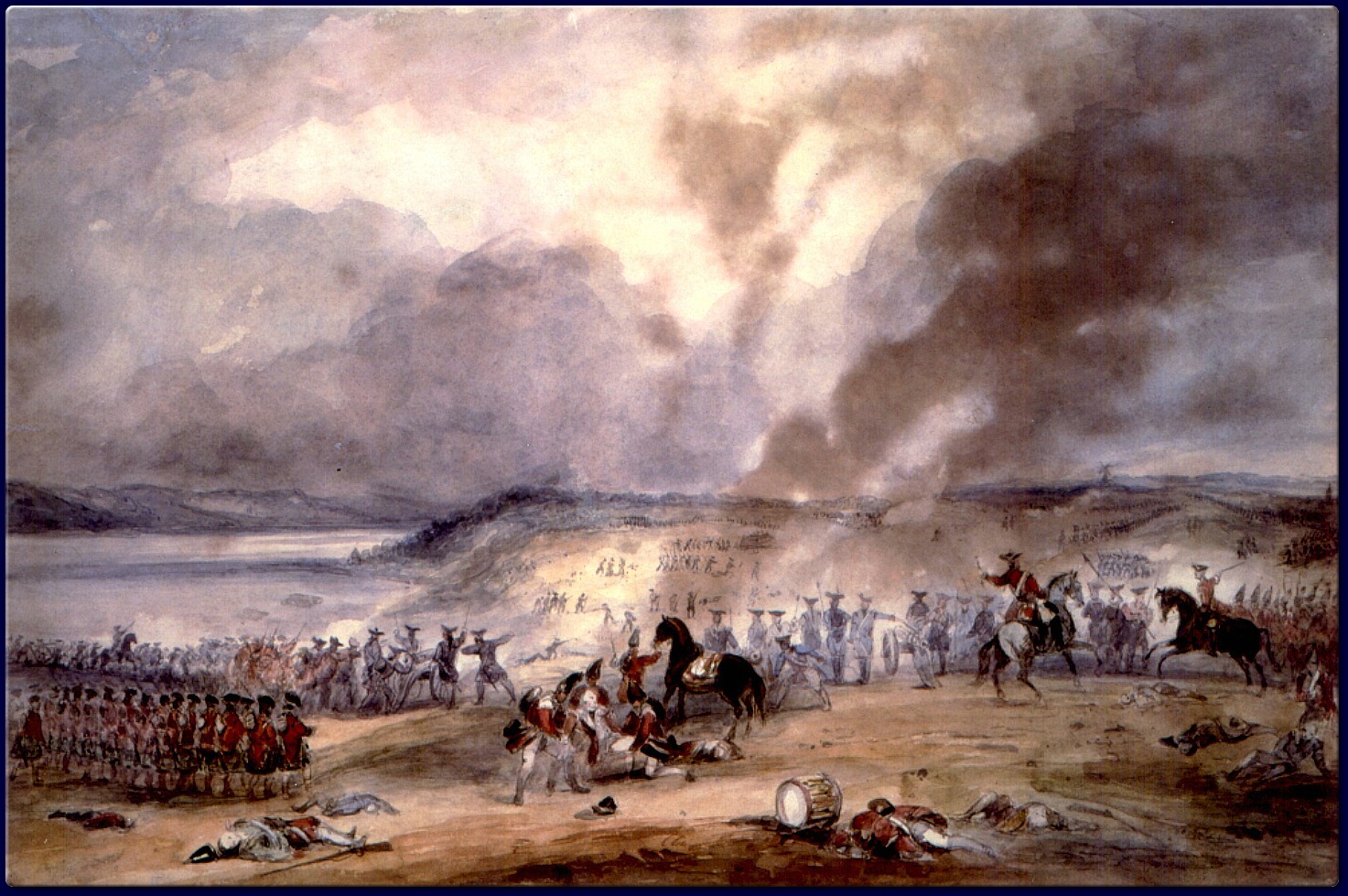
Battle of the Plains of Abraham; The Most Significant Event of the Seven Years’ War
An analysis of the Battle of the Plains of Abraham by Dahlia Varma
Canada, how we know it today, was shaped by the events of a single hour, on September 13, 1759. Taken place on a field in front of 65-meter-tall cliffs, a groundbreaking battle raged between the French and the British, led by some of each side’s finest commanders. The battle would decide if the French would keep Quebec, their capital and biggest settlement in North America or if the British would be able to expand their presence in North America and create a powerful country in the future. The Battle of the Plains of Abraham was the most impactful, significant event of the Seven Years War in North America for three reasons. Because of the battle, the French lost the capital of New France to the British, causing the political landscape of that area to change. To add to that, the long-term effects shaped the culture of Canada today.
Firstly, the Battle of the Plains of Abraham resulted in the French losing their capital of New France to the British. The French surrendered their city after retreating and being ambushed by British battle strategies. Proof of the British triumph happened on September 18, five days after the battle. This was when the French commander signed the Articles of Capitulation, officially turning Quebec over to the British. After this, the French settlers in Quebec fell under British rule and the rest of New France slowly disappeared without a capital. Evidence of British victory was how the French retreated into Quebec powerless when Commander Montcalm and Commander Wolfe were both mortally wounded. 640 French and 650 British soldiers were also wounded or killed. Finally, the British were able to win the battle due to clever strategies thought up by Commander Wolfe. He ordered his men to double load their muskets for the first battle fire and wait until the French got in close enough range to hit before firing. Meanwhile, the French attacked immediately, and their bullets were too far away to hit the attackers. The British hit them when they were reloading their muskets. The British strategies changed the course of the battle entirely. The Battle of the Plains of Abraham resulted in the French losing the capital of New France, with long-term effects that continue to be shown today.
Secondly, the Battle of the Plains of Abraham caused a change in politics in Upper North America. How it changed the future of laws, government, and borders made the battle the most important of all. To start, British victory of the Battle of the Plains of Abraham caused the Royal Proclamation of 1763, an act that replaced French law with English criminal and civil law. This meant that all French settlers living in Quebec had to move somewhere else or follow the laws of the British. Evidence shows that the battle gave Britain ownership over almost all Upper North America, and their laws still impact the country here today. Britain is still here through the governor general, who represents the United Kingdom in Canada’s government and how King Charles III of England is also Canada’s monarch. Lastly, the Battle of the Plains of Abraham led to a change in British laws to accommodate the French under their rule. Seven years after the Royal Proclamation, the French living under British rule realized that being Catholic prevented them from having public position. The British changed their policies in the Quebec Act of 1774 so the French would be able to practice their religion but follow British laws. These points outline how the Battle of the Plains of Abraham made a big impact on politics in Canada today.
Thirdly, the Battle of the Plains of Abraham would affect the culture and identity of settlers and the land in the future. Under British rule, French settlers would become bilingual, and their lifestyle would change but their culture would hold strong. To begin, proof shows that French settlers were taught to speak English and today, 52% of the population of Quebec can speak English. This stemmed from the Battle of the Plains of Abraham, and how the French living in Quebec were forced to change their ways. Next, British culture and trading were brought to Quebec and the rest of future Canada, thanks to the Battle of the Plains of Abraham. Much of the population at the time were to practice Anglicanism. Service and activities were also introduced to Upper North America, such as the red cross, boy scouts, and girl guides. Finally, French culture held strong, and it created a unique French society, within a larger British settled country. Because of the battle 60,000 French settlers came under British rule but today their language, religion, and culture continue to impact Canada. The Battle of the Plains of Abraham affected the culture and identity of Upper North America in the past, present, and future.
The most significant, impactful event of the Seven Years War was the Battle of the Plains of Abraham, changing the course of history forever in one hour. French power in North America was transferred to the British, proven through the Articles of Capitulation, the battle strategies of the British, and the outcomes of the battle. The political system in North America would forever be changed with the Royal Proclamation of 1763, the Quebec Act of 1774 and Britain’s influence on our country today. Finally, the culture of future Canada was developed through the English language influencing the land, the traditions and lifestyle of settlers changing, and the French culture holding strong while adapting under British rule. The country that we live in today stemmed from and was made possible by the Battle of the Plains of Abraham. Although the event itself lasted one hour, the effects that it had on North America continue to be shown through Canadians today.
References
Boberg, C. (2019). Canadian English. In The Canadian Encyclopedia. Retrieved from https://www.thecanadianencyclopedia.ca/en/article/canadian-english
de Bruin, T. (2021). Battle of the Plains of Abraham. In The Canadian Encyclopedia. Retrieved from https://www.thecanadianencyclopedia.ca/en/article/battle-of-the-plains-of-abraham
History.com Editors. (2009, November 9). Battle of Quebec (1759). History. https://www.history.com/topics/native-american-history/battle-of-quebec-1759
History Tools. (n.d.). The siege of Quebec: The battle that reshaped North America. History Tools. https://www.historytools.org/stories/the-siege-of-quebec-the-battle-that-reshaped-north-america
Miquelon, D., & Massicotte, L., & McIntosh, A. (2019). The Conquest of New France. In The Canadian Encyclopedia. Retrieved from https://www.thecanadianencyclopedia.ca/en/article/conquest
Office of the Secretary to the Governor General. (2022). Role and responsibilities. The Governor General of Canada. https://www.gg.ca/en/governor-general/role-and-responsibilities
Christou, T., Collishaw, R., Hallman-Chong, S., & Hendricks, C. (2016). Nelson History 7. Nelson Education Ltd. ch3_p.80-87.pdf
Thanks for reading! This article is written by Dahlia Varma.